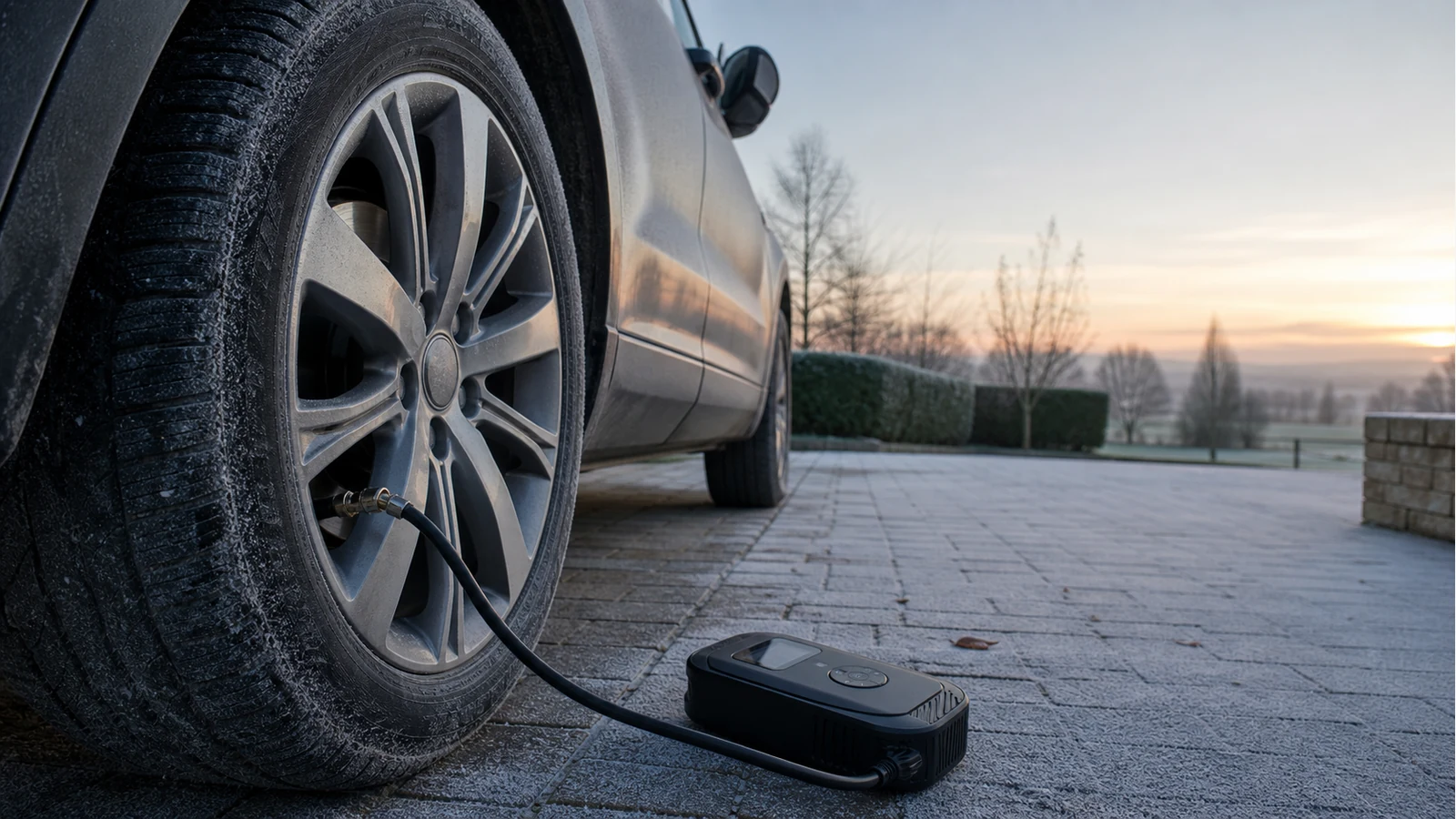
Winter Tyre Pressure Drop Uk Inflator Checklist
When winter temperatures fall in the UK, tyre pressure can fall too. The right response is simple: check the tyres when they are cold, use the vehicle placard or handbook figure, top up evenly, then recheck rather than guessing a higher winter pressure.
The short winter answer
Cold air contracts, so a tyre that was correct during a mild afternoon can read low on a frosty morning. That does not automatically mean there is a puncture. It does mean the car should be checked before a journey, because the Highway Code maintenance guidance tells drivers to check tyre pressures weekly and before journeys while tyres are cold.
TyreSafe gives a similar habit-based rule: check pressures at least monthly and before long journeys, using cold tyres and the vehicle maker's figures rather than a sidewall maximum. Its TyreSafe pressure-check advice is useful because it keeps the focus on routine checks rather than panic after a dashboard warning.
Cold-morning checklist
- Find the correct target. Use the driver's door shut, fuel flap, handbook or infotainment tyre menu. Match the tyre size and load state.
- Check before driving. A warm tyre can give a misleading reading, so do this before the school run or commute rather than after ten miles.
- Measure all four tyres. A similar drop across the axle points to weather and normal variation. One tyre much lower than the others needs closer attention.
- Top up to the placard figure. Do not add a random extra margin to compensate for winter. Over-inflation can create its own handling and wear problems.
- Recheck the next cold morning. If one corner falls again, book a puncture or valve inspection instead of repeatedly topping it up.
What a portable inflator changes
A driveway inflator does not make the tyre safer by itself; the useful part is that it removes friction from the weekly habit. You can check tyres cold, before the car has moved, without relying on a working forecourt airline. A digital preset also makes it easier to stop at the placard figure instead of overshooting and bleeding air back out.
Public winter guidance often describes pressure loss as an approximate temperature effect, not a brand performance claim. The Rescue Tyres cold-weather pressure guide explains why frosty mornings commonly expose low readings and why drivers should avoid chasing the TPMS light with over-inflation.
When not to keep topping up
Stop treating it as a weather top-up if the same tyre repeatedly loses pressure, if there is visible sidewall damage, if the valve hisses, or if the car pulls or vibrates. That is a repair decision, not an inflator decision.
If the dashboard warning is part of the problem, the next useful read is the TPMS cold-weather warning checklist. If the car is packed for a trip, use the loaded and unloaded pressure guide before setting the target.