Tpms Light Cold Weather Top Up Uk
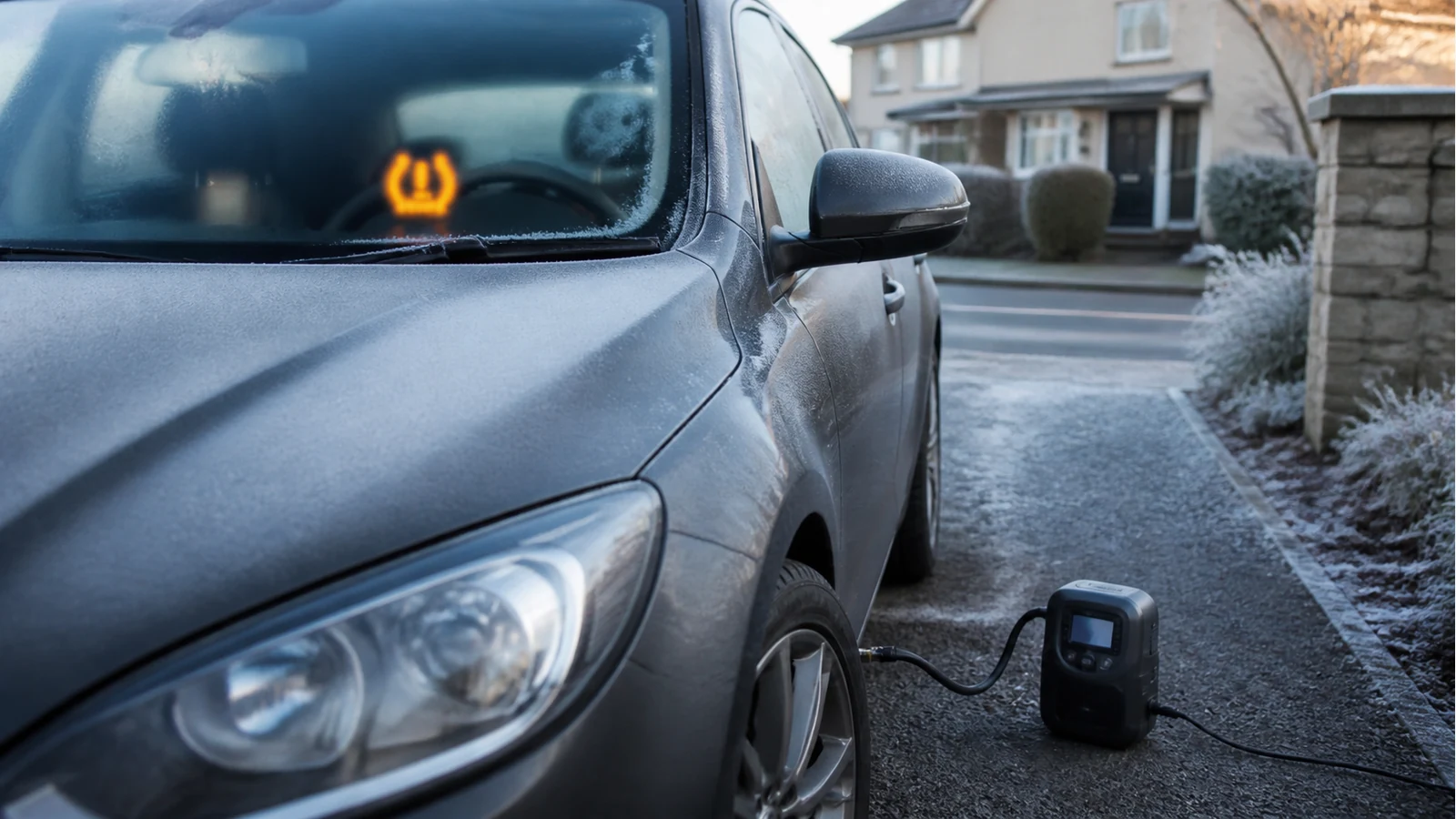
If the TPMS light appears on a cold UK morning, check all four tyres while they are cold and top up to the vehicle placard. A similar drop across the tyres often points to temperature. One tyre that keeps falling, or a warning that returns after correct inflation, needs inspection.
Do not treat TPMS as the first check
A tyre pressure monitoring system is a warning, not a maintenance routine. The RAC TPMS guide explains that TPMS can warn about significant under-inflation and that temperature changes can affect readings. The practical lesson is to measure the tyres, not to silence the light blindly.
Diagnostic ladder
- Park safely and inspect. If there is visible damage, a flat tyre, vibration or poor handling, stop and get help rather than topping up and carrying on.
- Measure all four cold tyres. Use the placard or handbook target. Avoid readings after a long drive because warm tyres can mislead.
- Compare the pattern. A small, even drop across tyres after a cold night is different from one corner being far lower.
- Top up to the placard figure. Do not over-inflate just to clear the dashboard light.
- Recheck in 24 to 48 hours. If the same tyre falls again, book a puncture, valve or rim check.
Cold weather or slow puncture?
Cold weather often exposes marginal pressure because air contracts as temperature falls. The Rescue Tyres cold-weather tyre pressure advice describes why frosty mornings can trigger warnings and why one tyre repeatedly dropping is a leak clue. A slow puncture usually behaves unevenly: one tyre keeps falling faster than the others.
When to stop driving far
Do not continue a long journey if the light remains after correct inflation, one tyre will not hold pressure, the tyre looks damaged, the car vibrates, or steering feels wrong. The Highway Code warning-display guidance says warning displays should not be ignored, and its tyre advice points drivers back to cold weekly checks.
Where a portable inflator fits
A digital inflator is useful because it lets you measure and top up on the driveway before the tyres warm up. It does not diagnose a puncture. Use it to restore the correct pressure, then use the recheck to decide whether the issue is weather or a repair job.
For a broader winter routine, use the winter tyre pressure drop checklist. If the warning appears before a packed trip, confirm the right target in the loaded versus unloaded pressure guide.