Best Portable Tyre Inflator UK: 2024 Buying Guide
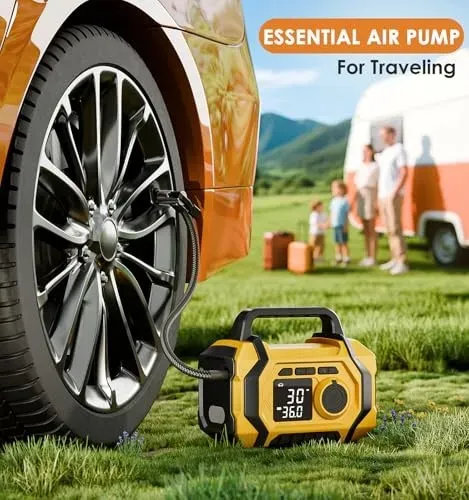
Best Portable Tyre Inflator UK: 2024 Buying Guide
Flat battery? Forgotten charging cable? Rain on the hard shoulder? Most UK drivers do not think much about tyre pressure until it becomes inconvenient, expensive, or unsafe. Yet under-inflated tyres affect braking, fuel economy, tyre wear, and overall control of the vehicle. A reliable portable tyre inflator turns a minor problem into a quick five-minute job on your driveway, at work, or before a long motorway run.
If you are searching for the best portable tyre inflator UK drivers can rely on, this guide is designed to help you buy with confidence. We will compare cordless and 12V models, explain the features that genuinely matter, cover UK tyre pressure rules and MOT implications, and show how to choose the right ETENWOLF inflator for your vehicle and driving habits.
This article has been written for UK motorists with commercial intent in mind: not vague advice, but practical buying guidance based on real-world use cases, UK regulations, and the features that separate a dependable car air compressor UK buyers will trust from a cheap inflator that struggles when you need it most.
Key Takeaways
- A portable tyre inflator helps UK drivers maintain safer, more efficient tyre pressure at home and on the road.
- Under-inflated tyres can increase stopping distances, accelerate tyre wear, and raise fuel consumption.
- For convenience, cordless inflators suit regular top-ups and quick roadside use; for uninterrupted power, 12V plug-in models remain a practical choice.
- Look for accurate digital pressure readings, auto-shutoff, suitable PSI output, inflation speed, hose length, and compatibility with your vehicle type.
- Incorrect tyre condition can contribute to MOT failures, and UK drivers remain responsible for roadworthy tyres at all times.
- ETENWOLF inflators are best chosen according to vehicle size, usage frequency, and whether you value portability, power source flexibility, or faster inflation.
Why Every UK Driver Needs a Reliable Portable Tyre Inflator
A portable tyre inflator is no longer a niche gadget for enthusiasts. For many UK households, it is now an essential piece of car care equipment alongside a jump starter, warning triangle, and screenwash. Tyres naturally lose pressure over time, even without a puncture. Add seasonal temperature changes, heavy loads, potholes, and kerb impacts, and it becomes easy to see why regular pressure checks matter.
The safety case is straightforward. Tyres are your car’s only contact with the road surface. If press too low, the tyre flexes more than intended, heats up faster, and can reduce handling precision. In wet British conditions, that matters even more. According to National Highways, defective tyres and illegal, defective, or under-inflated tyres are among the vehicle defects that can contribute to collisions, and tyre safety remains a major roadworthiness issue in the UK. Meanwhile, the RAC has repeatedly highlighted that many drivers do not check tyre pressures often enough.
There is also a financial argument. The Energy Saving Trust notes that correctly inflated tyres can help improve fuel efficiency. Even modest under-inflation across four tyres can increase rolling resistance and mean more frequent visits to the petrol station. Over months of commuting, school runs, and weekend travel, those costs add up.
Then there is convenience. Petrol station air lines are not always available, not always working, and not always accurate. Some now charge for use. A home inflator lets you check and adjust pressures on your own schedule, whether before a holiday, after a cold snap, or when the dashboard warning light appears.
For drivers with children, elderly passengers, or long motorway journeys ahead, peace of mind matters too. The NHS advises motorists to prepare properly for journeys and reduce avoidable roadside risks. Keeping tyres at the correct press one of the simplest ways to do that. A portable inflator helps you act immediately rather than postponing a pressure top-up until it becomes a bigger issue.
The most common situations where a portable inflator proves its value
- Dashboard TPMS warning light: you can verify and correct pressure quickly at home.
- Cold-weather pressure drops: lower temperatures can reduce tyre pressure, often enough to trigger warnings.
- Before long trips: ideal for motorway journeys, airport runs, and family holidays.
- After carrying heavy loads: pressure may need checking when the car is packed for travel.
- Occasional slow punctures: useful for topping up enough to reach a tyre specialist safely, where appropriate.
- Multi-vehicle households: one inflator can cover cars, bikes, and often other inflatables as well.
In short, the best portable tyre inflator is not simply about emergencies. It is about routine maintenance made easy, which is exactly why more drivers now want to buy digital tyre inflator UK models that combine speed, accuracy, and simplicity.
Cordless vs 12V Plug-in Compressors: Which is Best?
One of the first decisions when choosing a 12v tyre pump guide worthy inflator is the power source. Should you go cordless for flexibility, or stick with a 12V plug-in compressor for continuous power from the vehicle? The answer depends on how, where, and how often you expect to use it.
Cordless tyre inflators: best for convenience and flexibility
Cordless inflators have become increasingly popular because they remove one of the biggest frustrations of traditional compressors: cables. Without needing to route a power lead from the car’s 12V socket, you can move more freely around the vehicle and use the inflator in places where plugging in is awkward.
For many drivers, this makes cordless the best portable tyre inflator UK option for day-to-day use. It is particularly practical if you park away from the kerb, use a garage, maintain more than one vehicle, or want something that can also inflate bicycles, sports balls, and other household items.
Key advantages of cordless models include:
- Excellent portability and ease of use
- No need to keep the engine running or rely on a 12V cable length
- Quick setup for routine tyre top-ups
- Useful beyond the car, including bikes and outdoor equipment
The main trade-off is battery management. You need to keep the unit charged, and some lower-quality cordless inflators lose performance when the battery level drops. That is why battery quality, motor efficiency, and real-world inflation speed matter more than marketing claims.
12V plug-in compressors: best for dependable continuous power
A 12V compressor plugs directly into your car’s accessory socket. Its major advantage is continuous power from the vehicle, which can be reassuring if you are inflating several tyres in one session or dealing with larger tyres that need more air volume.
This makes a 12V model a strong option for drivers who want a traditional car air compressor UK setup, especially if they primarily use it for car tyres rather than mixed household tasks. For some users, it also removes the concern of remembering to recharge a battery.
Advantages of 12V inflators include:
- Consistent power delivery during longer inflation jobs
- No separate charging routine
- Often well-suited to drivers who mainly top up car tyres only
- A practical choice to keep permanently in the boot
The downsides are reduced mobility and reliance on the vehicle socket. Cable length can be limiting, and setup is usually less convenient than with cordless models. If you want a deeper breakdown, see our Cordless vs 12V Tyre Inflators: Which Should You Buy? guide.
Which is best for UK drivers in 2024?
For most modern drivers, especially those who value ease of use and fast routine maintenance, a quality cordless inflator is often the better all-round purchase. It feels more modern, more flexible, and more practical for mixed use. However, if you regularly inflate larger tyres, prefer not to manage battery charging, or want uninterrupted runtime from the vehicle, a good 12V unit still makes sense.
The key point is this: do not choose based on power source alone. Choose based on vehicle type, tyre size, storage space, frequency of use, and how much convenience matters to you. A well-designed inflator in either category can outperform a more powerful-looking but poorly engineered alternative.
Key Features to Look For: PSI, Auto-Shutoff, and Speed
Not all inflators are equal. If you are comparing models online, product pages can look similar, but the user experience can be very different. The best portable tyre inflator UK buyers should consider is one that balances accuracy, usability, speed, and build quality rather than chasing a single headline number.
1. Pressure range and PSI accuracy
PSI is one of the first specifications buyers notice, but maximum PSI can be misleading. Most passenger cars in the UK need tyre pressures somewhere around the 30 to 40 PSI range, though always check your vehicle handbook, fuel flap sticker, or door jamb label. If you drive an SUV, van, or carry heavier loads, required pressures may be higher.
What matters more than an inflated maximum figure is whether the inflator can read and deliver pressure accurately in the range your vehicle actually uses. A digital display with clear readouts in PSI, BAR, and kPa is ideal. Accuracy helps avoid both under-inflation and over-inflation.
2. Auto-shutoff
Auto-shutoff is one of the most useful modern features. You set the target pressure, start inflation, and the machine stops automatically when the tyre reaches that level. This is safer, more convenient, and easier for less experienced users than manual guesswork.
If you want to buy digital tyre inflator UK shoppers increasingly prefer, auto-stop should be near the top of your checklist. It reduces user error and turns a fiddly maintenance task into something almost effortless.
3. Inflation speed in real conditions
Manufacturers often quote speed based on ideal test conditions, but real-world performance matters more. Ask practical questions:
- How long does it take to top up a typical family car tyre by a few PSI?
- Can it cope comfortably with four tyres in one session?
- Does it overheat or require long cooldown periods?
A fast inflator is particularly valuable in poor weather or when you are checking multiple vehicles. However, speed should not come at the expense of control, accuracy, or noise management.
4. Digital display and ease of reading
A backlit digital screen is a significant upgrade over older analogue-style designs. In winter evenings, dim garages, or roadside conditions, a clear display is easier to read and less prone to misinterpretation. Better units also offer intuitive controls, preset pressure memory, and simple switching between units of measurement.
5. Hose length and cable practicality
Whether you choose cordless or 12V, reach matters. You need enough hose length to access all four tyres without awkward positioning. On 12V units, cable length becomes equally important. Poorly designed inflators can be frustrating simply because they do not comfortably reach around the vehicle.
6. Build quality and reliability
This is where cheaper inflators often disappoint. Thin plastics, weak connectors, poor thermal management, and inaccurate sensors can turn a bargain into a false economy. A tyre inflator is a tool you may depend on in inconvenient conditions, so durability matters.
At ETENWOLF, product design focuses on dependable everyday performance rather than gimmicks alone. That means looking carefully at motor quality, pressure consistency, user controls, and the practical realities of how motorists actually use inflators on British roads and driveways.
7. Battery performance and charging options
If you choose cordless, battery quality is critical. Look for sensible runtime, stable output, and straightforward recharging. A cordless inflator is only truly convenient if it is ready when you need it. USB charging or modern charging options can make storage and top-up charging easier.
8. Extra features that are genuinely useful
Some extras are worth having; others are simply there for marketing. Useful additions may include:
- Built-in LED light for night-time use
- Multiple nozzle attachments
- Compact storage case or bag
- Pressure memory presets
- Overheat protection
If you are considering whether premium digital features justify the price, our article Are Smart Digital Tyre Inflators Worth the Money? explores that in more detail.
Understanding UK Tyre Pressure Laws and MOT Requirements
Tyre press not just a maintenance preference. In the UK, drivers are legally responsible for ensuring their vehicle is roadworthy. While there is not a standalone law that says you must check tyre pressure on a particular schedule, tyre condition, suitability, and safety are all governed by roadworthiness requirements.
What UK law expects from drivers
Under the Road Traffic Act and Construction and Use Regulations, tyres must be fit for purpose, correctly fitted, and in safe condition. That includes adequate tread depth, freedom from dangerous defects, and suitability for the vehicle and load. Tyre pressure links directly to safe operation because an under-inflated tyre may handle poorly, wear unevenly, and in serious cases become unsafe.
Even if your tyres appear visually acceptable, poor maintenance can still create risk. If you are involved in an incident and your tyres are found to be unsafe, that can have legal and insurance implications.
MOT requirements and tyre-related failures
The MOT test checks tyre condition, tread depth, axle matching, load rating, and obvious defects. The legal minimum tread depth for cars in the UK is 1.6mm across the central three-quarters of the tread around the entire circumference. However, many safety organisations recommend replacing tyres before they reach the absolute legal limit, especially for wet-weather performance.
While tyre prestself is not measured as a standard MOT pass/fail item in the same way tread depth is, incorrect pressure can contribute to uneven wear or visible issues that do affect test outcomes. More importantly, the MOT is only a snapshot. A tyre can pass one day and still become unsafe later if neglected.
TPMS and modern vehicles
For many newer cars, tyre pressure monitoring systems (TPMS) add another layer of relevance. According to GOV.UK MOT inspection guidance, where TPMS is fitted to relevant vehicles, warning lamp issues can affect MOT results. If your dashboard shows a tyre pressure warning, it should not be ignored.
A portable inflator helps you respond immediately by checking and correcting pressure before assuming there is a more serious fault. If the warning persists, the next step is to inspect for punctures or sensor issues and seek professional advice.
Where to find the correct tyre pressure for your car
Never guess. The right pressure for your vehicle is usually listed in one or more of these places:
- Driver’s door frame or door jamb sticker
- Inside the fuel filler flap
- Vehicle handbook
- Manufacturer guidance for specific load conditions
Remember that front and rear pressures may differ, and fully loaded driving conditions may require alternative settings. This is especially relevant for estate cars, SUVs, and vehicles used for family holidays.
How often should UK drivers check tyre pressure?
A sensible rule is at least once a month and before any long journey. This aligns with advice commonly given by UK motoring organisations including the RAC and AA. It is also wise to check after sudden temperature changes, impact with a pothole, or when the car feels different to drive.
If you need a practical walkthrough, read our How to Check & Inflate Car Tyres at Home (UK Guide) article for a tailored to UK motorists.
How to Choose the Right ETENWOLF Inflator for Your Car
Choosing the right inflator is easier when you start with your own use case rather than the product specification sheet. The best ETENWOLF inflator for a city hatchback owner will not necessarily be the same as the best option for a motorway commuter, SUV driver, or family with multiple vehicles.
For small cars and occasional use
If you drive a supermini, hatchback, or small saloon and mainly want peace of mind for monthly checks and occasional top-ups, prioritise compactness, ease of storage, and digital simplicity. A cordless ETENWOLF inflator is often ideal here because it is quick to grab, straightforward to use, and easy to keep in a boot organiser or garage shelf.
What matters most in this category:
- Compact design
- Clear digital display
- Auto-shutoff
- Enough battery life for routine use
- Simple controls for fast setup
For families and daily drivers
If your car handles school runs, shopping, commuting, and weekend travel, convenience becomes even more important. You may be checking tyres more often due to mileage and varied loads. In this case, look for an ETENWOLF model with dependable speed, good ergonomics, and enough runtime or power continuity to handle all four tyres comfortably in one go.
Households with more than one vehicle often get the best value from a versatile inflator that can move easily between cars and other equipment. A digital preset function is especially useful when different vehicles require different pressure settings.
For SUVs, larger tyres, and heavier vehicles
Heavier vehicles generally demand more from an inflator. You want stronger airflow, robust thermal performance, and enough capacity to handle higher pressure requirements without struggling. If you own an SUV or crossover, choose an ETENWOLF inflator with proven capability rather than the smallest entry-level model.
If your needs extend beyond standard passenger cars, such as vans or motorhomes, it is worth reading Best Tyre Inflator for Vans & Motorhomes in the UK for more specialised recommendations.
For roadside reassurance
Some buyers want an inflator primarily as an emergency backup rather than a frequent maintenance tool. In that case, the priorities shift slightly: you want easy storage, fast deployment, intuitive controls, and confidence that the unit will work when it has been sitting in the boot for weeks. Reliable charging retention and sturdy build quality matter more than novelty features.
For drivers who want the easiest user experience
If you prefer products that simply work without a learning curve, choose an ETENWOLF model with:
- Digital pressure presetting
- Automatic stop at target PSI
- Clear unit switching
- Integrated light for low-visibility conditions
- Included adapters for broader use
This type of inflator is particularly suitable for drivers who may not be mechanically minded but still want to maintain their vehicle properly.
Why ETENWOLF is a strong choice for UK buyers
When comparing inflators, trust comes from more than specifications. It comes from practical design, consistency, and whether the product solves genuine driver problems. ETENWOLF products are built with a focus on modern usability: clear digital interfaces, portable formats, and dependable inflation control that fits the needs of real drivers rather than just ticking feature boxes.
For UK customers, that matters because conditions are varied. You might be topping up tyres on a dark winter evening, before a holiday on the M5, or after a cold snap in a driveway with limited space. A portable inflator needs to be intuitive, accurate, and robust enough for those everyday moments.
How to Compare Portable Tyre Inflators Before You Buy
If you are ready to buy, use this simple comparison framework. It helps cut through marketing language and focus on what actually affects ownership experience.
- Check your vehicle type: small car, family car, SUV, van, or mixed use.
- Decide on power source: cordless for flexibility or 12V for continuous vehicle-powered operation.
- Confirm required pressure range: based on your manufacturer’s recommended tyre pressures.
- Look for auto-shutoff: one of the most useful real-world features.
- Read for display clarity and controls: especially if you may use it in poor light.
- Assess portability: size, weight, storage case, and overall convenience.
- Consider build quality: hose attachment, thermal management, and material feel matter.
- Choose a reputable brand: support, consistency, and product design standards are important.
A good inflator should save time, reduce stress, and make tyre checks more likely to happen regularly. That is the real value. The best purchase is the one you will actually use.
Final Verdict: What Is the Best Portable Tyre Inflator UK Drivers Should Buy?
The best portable tyre inflator for UK drivers in 2024 is not necessarily the one with the highest advertised PSI or the lowest price. It is the one that gives you accurate pressure control, fast and convenient operation, dependable build quality, and the confidence to maintain your tyres properly all year round.
For most motorists, a high-quality digital inflator with auto-shutoff and either strong cordless convenience or reliable 12V performance will be the smartest investment. If you want a modern, user-friendly solution for routine tyre care, ETENWOLF is well placed to deliver that balance of practicality and performance.
And because tyre pressure affects safety, comfort, tyre lifespan, and fuel efficiency, buying the right inflator is not just a gadget purchase. It is a sensible investment in the ongoing running of your vehicle.
Shop ETENWOLF Portable Tyre Inflators
Ready to choose a reliable inflator for your car? Explore the ETENWOLF range and find the right model for your vehicle, driving habits, and budget.
Frequently Asked Questions
What is the best portable tyre inflator UK drivers can buy for home use?
For home use, most drivers benefit most from a digital inflator with accurate pressure readings, auto-shutoff, and a compact design. Cordless models are especially convenient for monthly tyre checks on the driveway, while 12V models suit those who prefer vehicle-powered operation.
Are cordless tyre inflators powerful enough for car tyres?
Yes, a quality cordless inflator is usually more than capable of topping up and maintaining standard car tyres. The important factors are motor efficiency, battery quality, and real-world inflation performance rather than headline marketing claims alone.
How often should I check my tyre presn the UK?
You should check tyre pressure at least once a month and before long journeys. It is also wise to check after major temperature drops, pothole impacts, or if your tyre pressure monitoring system shows a warning.
Can a portable tyre inflator help me pass my MOT?
A portable inflator can help you maintain tyres properly between services and reduce the risk of uneven wear caused by incorrect pressure. While MOT tests focus on tyre condition, tread, and defects rather than routine pressure measurement alone, correct inflation supports safer tyres and better overall roadworthiness.
Ready to experience true cordless power with {brand_name}?
Explore Power — £112.32