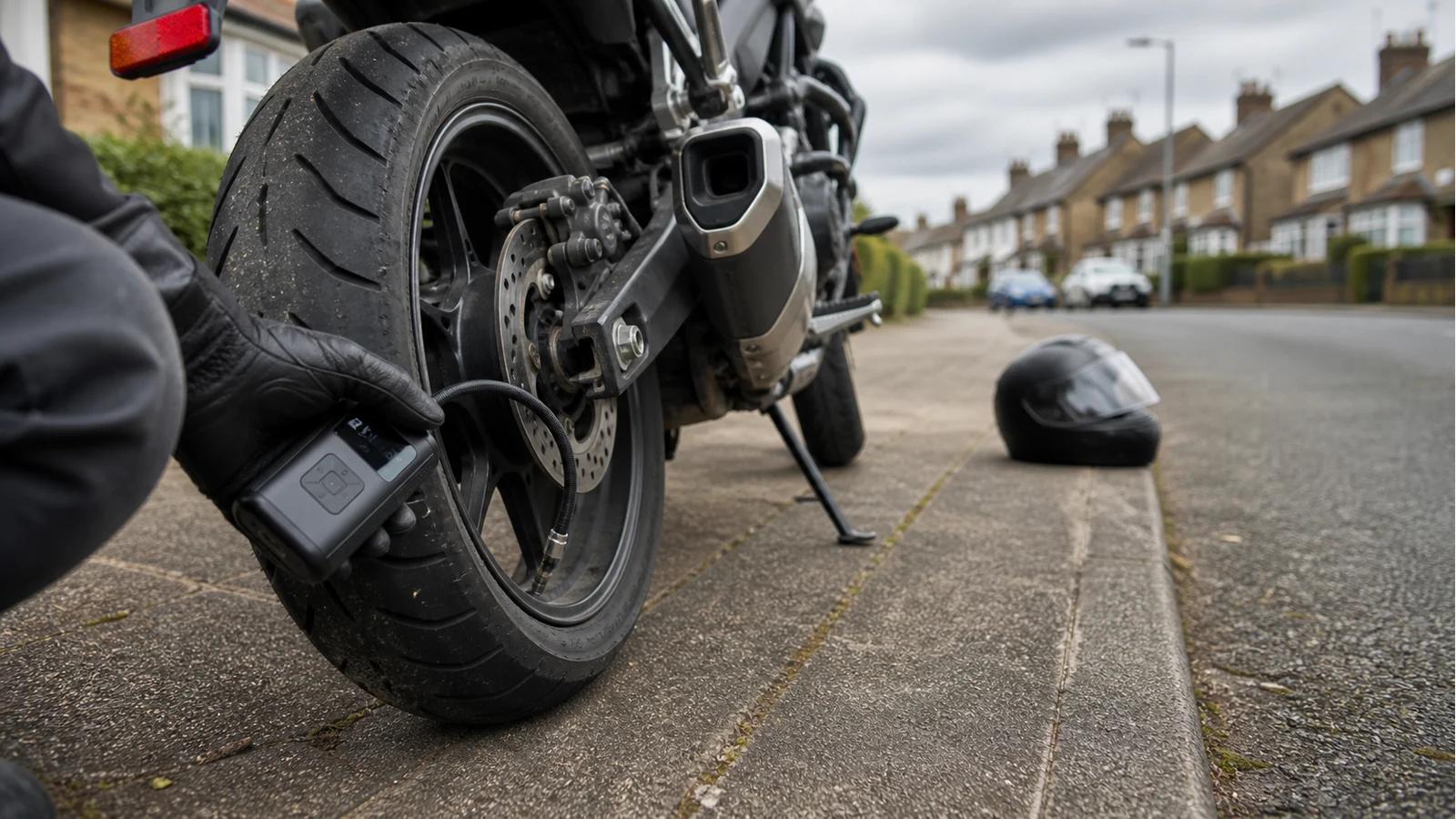
Motorcycle Cordless Tyre Inflator UK: Packable Pump Checklist
For most UK riders, a motorcycle cordless tyre inflator should be small enough to carry, precise enough for separate front and rear targets, and easy to stop automatically at the handbook pressure. Start with the bike's manual, then judge the pump by valve access, display clarity and pack size.
What riders need from a cordless pump
Motorcycles punish vague pressure habits. A small pressure change can be more noticeable on a bike than in a family car, and front and rear tyres often have different targets. UK motorcycle coverage of cordless pumps, including this ScooterLab portable inflator review, tends to focus on custom PSI settings, automatic stop and whether the unit is actually easy to carry on a scooter or bike.
The appeal is practical: you can check before a wet commute, outside a flat, or at a meet point without finding a garage airline. But packable does not mean every mini pump is right for every rider.
Motorcycle inflator checklist
- Front and rear targets: save or set the correct handbook figures separately. Do not copy another rider's pressure.
- Valve access: make sure the hose or chuck fits around discs, spokes and tight wheel angles without forcing the valve stem.
- Auto-stop: a clear preset reduces the risk of overshooting when the bike is on a side stand or the display is awkward to see.
- Units: the pump should switch cleanly between PSI and bar if your bike documents use different units.
- Pack size: check whether it fits the pannier, top box, under-seat space or backpack you actually use.
When an ultra-mini pump is the wrong fit
Skip the smallest option if you also want one tool for a car, van or trailer, or if you need repeated top-ups without long pauses. The Visordown rechargeable inflator review frames these tools as useful pannier kit, but the trade-off is always size versus broader vehicle usefulness.
CO2 cartridges still have a place
CO2 can still make sense for some roadside puncture kits because it is tiny and fast for an emergency. A cordless inflator is better for routine pressure setting, repeated checks and getting the exact cold pressure before a ride. Some retail listings, such as this Sportsbikeshop cordless inflator listing, show the features riders usually compare: maximum pressure, auto shut-off and display units.
If your concern is whether to trust a garage airline before a ride, compare the habits in the petrol station versus portable inflator guide. In winter, use the winter pressure checklist before assuming the pressure change is a puncture.