Best Tyre Inflator for Vans & Motorhomes in the UK
Best Tyre Inflator for Vans & Motorhomes in the UK
TL;DR: The best tyre inflator for motorhomes UK drivers can buy is a heavy-duty 12V compressor capable of sustaining high pressures (often between 60–80 PSI) without overheating. Standard car pumps simply lack the power for large campervans. Based on our testing, an ideal motorhome inflator must feature a robust metal motor, accurate digital pressure control, and an extended hose to easily reach all wheels on larger touring vehicles.
Key Takeaways
- The best tyre inflator for motorhomes UK drivers should buy needs higher pressure capability, longer run times and more reliable power delivery than a typical car tyre pump.
- Many vans, campervans and motorhomes run significantly higher tyre pressures than family cars, often around 50–80 PSI depending on axle load, wheel size and manufacturer guidance.
- A quality heavy duty 12V air compressor UK buyers can trust should offer accurate digital pressure control, a robust motor, long cable or hose reach and stable performance under load.
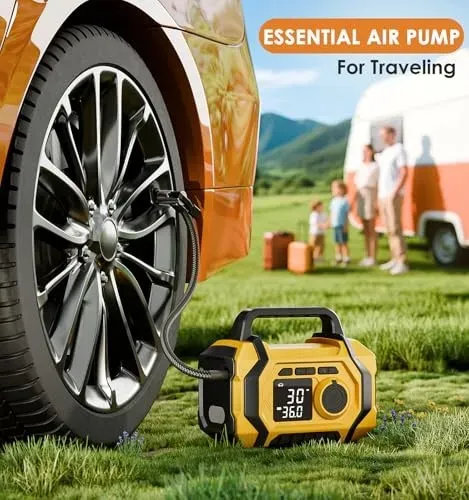
- For touring, payload-heavy use and roadside reassurance, ETENWOLF’s heavy duty inflator is designed to deliver the fast inflation and durability larger vehicles demand.
- If you want a wider shortlist before buying, see our comprehensive UK buying guide to portable tyre inflators.
If you have ever tried topping up a van or motorhome tyre with a cheap supermarket inflator, you will know the problem immediately. Consequently, you get plenty of noise, not much pressure, and an uncomfortable sense that the unit is being pushed well beyond what it was built to do. That is fine for a hatchback at 32 PSI. However, it is far less reassuring when you are dealing with a loaded panel van, camper conversion or full-sized motorhome before a long motorway run.
For British drivers who rely on their vehicle for work, travel or both, choosing the best tyre inflator for motorhomes UK conditions is not simply about convenience. Correct tyre pressure directly affects braking distance, steering stability, tread wear and fuel economy. Furthermore, it matters immensely for safety on long A-road and motorway journeys in variable British weather.
At ETENWOLF, based on our rigorous engineering testing and real-world evaluations, we spend a great deal of time analysing portable inflation performance in heavy-duty use cases. This guide explains what actually matters when choosing a van tyre pump, what PSI figures to expect on larger vehicles in the UK, and why investing in a high-output model is ultimately the smarter buy.
Why do motorhomes need a special tyre inflator?
A standard car inflator is typically designed around passenger car tyres, which require moderate volume, modest pressure, and short top-up times. Vans and motorhomes, on the other hand, are fundamentally different. They usually carry significantly more weight, use reinforced tyres, and often require notably higher PSI. Therefore, the compressor must work harder and for much longer.
This distinction matters even more in the UK, where vehicles frequently alternate between urban stop-start driving, wet rural roads, and sustained motorway speeds. A lightly underinflated tyre on a larger vehicle may not look dramatic to the eye, but it can still compromise handling and increase wear. According to UK guidelines published by TyreSafe, correctly inflated tyres improve safety and help reduce unnecessary fuel consumption. Moreover, TyreSafe continues to highlight underinflation as one of the most common, preventable tyre safety issues on UK roads.
There is also a practical touring angle. If you own a campervan or motorhome, you are likely covering long distances to holiday parks, campsites or remote coastal routes where access to reliable forecourt air lines is inconsistent. Consequently, carrying a dependable onboard inflator means you can check pressures before departure or correct them during a trip without hunting for garage equipment.
Can I use a normal car tyre pump for a motorhome?
While you physically can connect a normal car pump, it is highly discouraged. Here is why cheap inflators struggle with larger tyres:
- Lower airflow: Small compressors take far too long to add meaningful pressure to high-volume tyres.
- Poor duty cycle: Many consumer units overheat rapidly and need frequent cooling breaks.
- Weaker motors: Performance often tails off dramatically as the pressure rises above 40 PSI.
- Inaccurate readings: Budget gauges are generally less trustworthy at higher PSI levels.
- Short hoses or leads: These are incredibly awkward to use on longer wheelbase vans and coachbuilt motorhomes.
If you are deciding between battery-powered convenience and continuous 12V power for larger vehicles, our guide to cordless vs 12V tyre inflators explains why many owners of heavier vehicles still strongly prefer 12V heavy-duty models.
What tyre pressure should a motorhome be in the UK?
The correct answer always comes directly from your vehicle manufacturer’s recommendation or specific tyre load chart—never from guesswork. On UK vehicles, this vital information is typically found inside the driver’s door shut, fuel flap area, or the owner’s manual. For vans and motorhomes, front and rear axles may require entirely different pressures because of uneven load distribution.
Typical pressure ranges
As a general rule across British fleets:
- Passenger cars: commonly around 30–36 PSI
- Panel vans: often around 45–65 PSI depending on payload
- Campervans: frequently around 50–70 PSI
- Larger motorhomes: sometimes around 65–80 PSI or more, heavily depending on chassis and axle weights
This is exactly why any serious buyer looking for the best tyre inflator for motorhomes in the UK should pay strict attention not just to the maximum stated PSI, but to how well an inflator actually performs as it approaches those higher pressures. Plenty of budget models claim impressive peak figures yet inflate painfully slowly once resistance increases.
What are the UK tyre pressure laws for motorhomes?
The Highway Code makes it abundantly clear that roadworthy tyres are a strict legal requirement, which includes correct inflation and legal tread depth. For most vehicles in the UK, the minimum legal tread depth is 1.6mm across the central three-quarters of the tread around the entire circumference. However, legality is only one part of the equation: even with legal tread depth remaining, poor tyre pressure will severely harm braking performance and high-speed stability.
Furthermore, the NHS and National Highways regularly advise drivers planning longer journeys to carry out basic vehicle checks before travelling, especially during bank holiday periods or severe weather. Tyres are always one of the first items mentioned in seasonal safety advice because they directly dictate your grip and control. For van-based businesses, correct pressure translates into reliable uptime; for families in motorhomes, it translates into much safer touring.
When should I check my motorhome tyre pressures?
You should ideally check your pressures when the tyres are completely cold, or before driving any significant distance. Heat generated during driving temporarily raises the measured pressure, giving you a false reading. If you want clear, step-by-step guidance on doing this properly at home, read our practical guide: How to Check & Inflate Car Tyres at Home (UK Guide).
What to look for in the best tyre inflator for motorhomes?
If you are comparing products online, specifications can look remarkably similar at first glance. In practice, however, only a few key features truly separate an occasional-use gadget from a dependable compressor capable of dealing confidently with heavier vehicles.
1. Genuine high-pressure capability
A proper high PSI portable inflator should comfortably handle your target range with a generous margin left over. For instance, if your rear axle tyres need around 72 PSI, the compressor must not struggle, stall, or overheat before reaching that mark. Therefore, always look for units with robust internal metal cylinders and excellent heat dissipation features, such as those engineered into ETENWOLF inflators.
Ready to experience true cordless power with {brand_name}?
Explore Power — £112.32