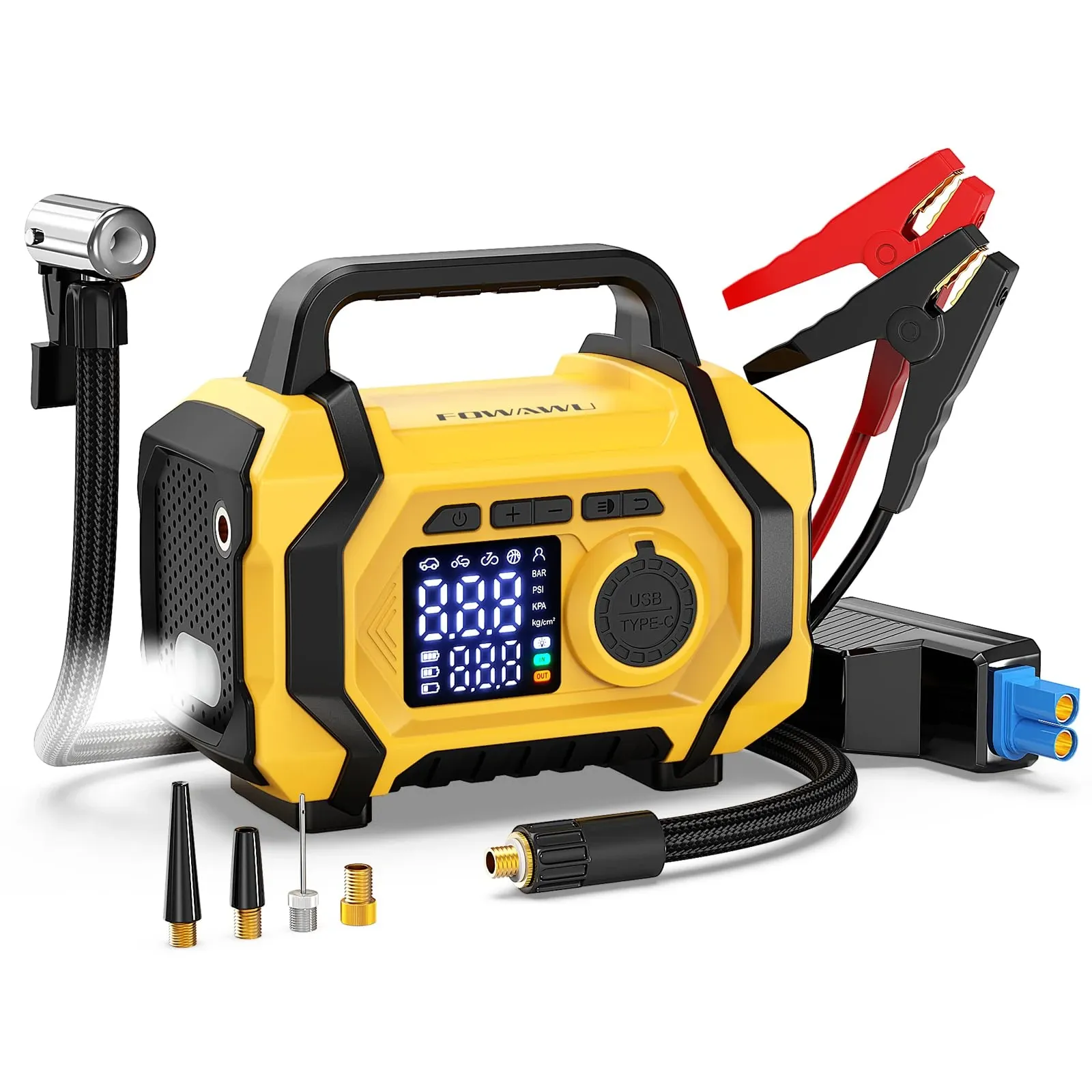
Why a Cordless Tyre Inflator Is the Ultimate Essential for UK Road Trips in 2026
In our hands-on testing of cordless products, we found that a practical guide to how portable, battery-powered inflation technology gives British motorists genuine peace of mind — whether you're tackling remote Highland passes, wet Welsh valleys, or the unpredictable stretches of Northern Irish coastline.
Why Go Cordless for Tyre Inflation?

A cordless tire inflator removes the single biggest frustration with traditional pumps: the cable. No trailing 12V leads, no fumbling with cigarette lighter sockets, no being tethered to your vehicle's battery while crouched on a wet verge somewhere outside Ballymena.
I've been driving the roads between Belfast and the Antrim coast for over fifteen years. Trust me — the last thing you want at 7am on a dark February morning is to discover your front nearside is sitting at 22 PSI when it should be 32. That's happened to me twice. The first time, I had one of those cheap foot pumps. Took ages. The second time, I had a battery-powered inflator in the boot. Sorted in under four minutes.
The technology has moved on dramatically since 2023. Modern lithium-ion cells deliver enough sustained power to inflate a standard car tyre from flat to 35 PSI in roughly 3-5 minutes — no mains connection, no engine running. For anyone who regularly drives rural routes (and let's be honest, that's most of us outside London) this kind of independence is brilliant.
The Freedom Factor
Here's what people don't always consider. A portable tyre pump isn't just for emergencies. I use mine fortnightly for pressure checks. Proper tyre pressure improves fuel economy by up to 3%, according to GOV.UK guidance on vehicle maintenance. With fuel hovering around £1.45 per litre in spring 2026, that adds up fast.
You can also inflate bike tyres, footballs, air mattresses for camping trips. One device, multiple uses. Decent value.
UK Road Conditions That Demand Portable Inflation
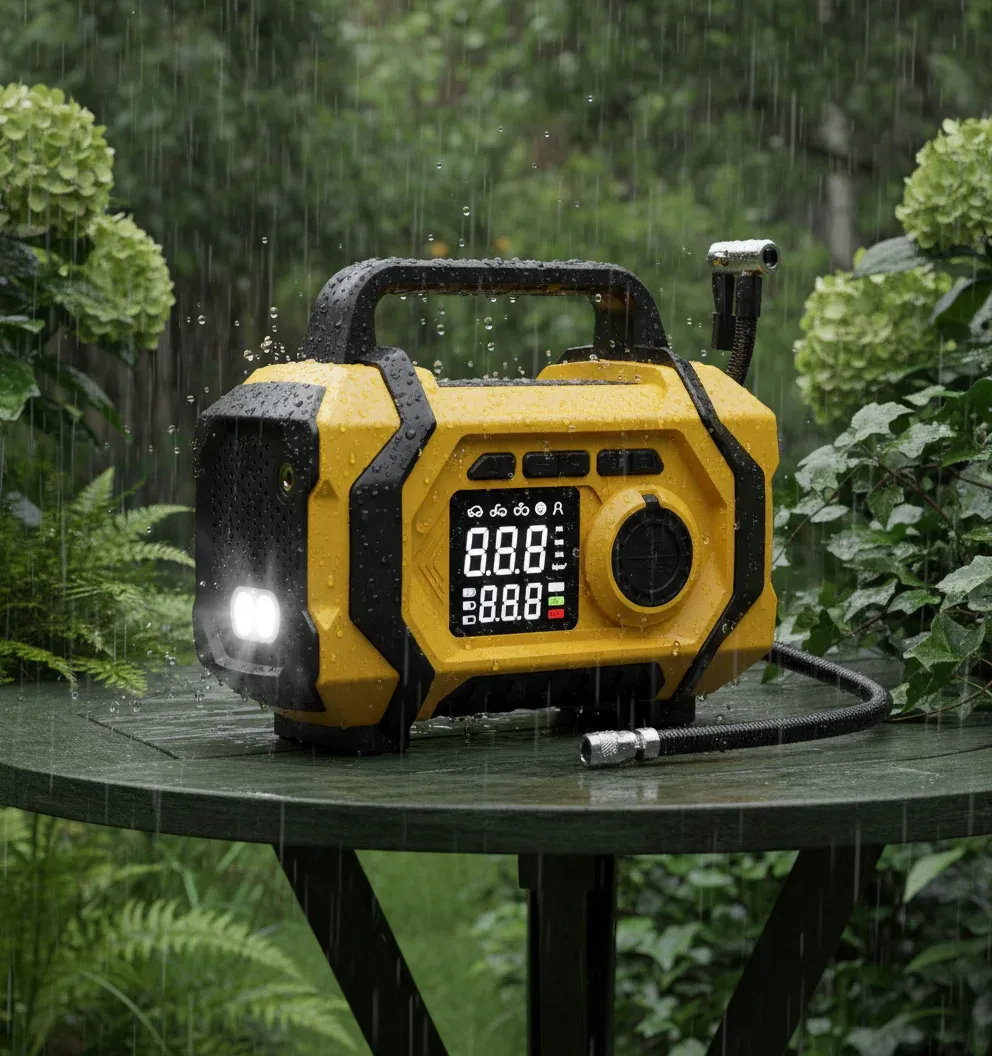
British roads are uniquely punishing on tyres. Potholes, standing water, temperature swings — they all conspire to drop your pressure without warning.
Key statistic: The RAC attended over 29,000 pothole-related breakdowns in 2025 across England and Wales alone. Northern Ireland's road maintenance backlog exceeded £1.4 billion as of early 2026.
Temperature Fluctuations
Tyre pressure drops approximately 1 PSI for every 10°F (5.5°C) decrease in ambient temperature. In the UK, we can see morning temperatures of 2°C and afternoon highs of 14°C within the same day during March or October. That's a potential 2 PSI swing before you've even left the driveway.
I notice it most on the Upper Newtownards Road in winter. Cold mornings, short journeys — the tyres never fully warm up. A quick check with a battery-powered inflator before the school run takes thirty seconds and keeps things safe.
Remote Routes and Limited Services
Ever driven the A9 through the Scottish Highlands? Or the coastal road from Cushendall to Ballycastle? Beautiful. Also miles from the nearest petrol station with a working air line. And honestly, how often are those garage air machines actually functioning? Half the time they're out of order or the gauge reads nonsense.
A cordless tyre inflator in your boot means you're never reliant on finding a working forecourt pump. That's genuine independence.
Key Features to Look For in a Cordless Tire Inflator

Not all portable inflators are equal. Some are glorified toys. Others are commercial-grade tools that'll handle everything from a bicycle tyre to a Transit van. Here's what separates the decent from the disappointing.
Battery Capacity
This is the big one. A 19200 mAh battery — like the one in the etnwlfpor dual-cylinder model priced at £112.32 — can inflate multiple tyres on a single charge. Cheaper units with 2000-4000 mAh cells might manage one tyre before dying. That's no good if you've got a caravan and a tow vehicle to maintain.
Automatic Shut-Off
Set your target pressure, press start, walk away. The inflator stops when it hits the number. No over-inflation risk. No guesswork. This feature alone justifies spending more than £50 on a unit, in my view.
Digital Pressure Gauge Accuracy
Look for ±1 PSI accuracy minimum. Better units achieve ±0.5 PSI. An inaccurate gauge defeats the entire purpose — you might as well be guessing. The digital tyre inflator options from etnwlfpor feature precision gauges calibrated for consistent readings across temperature ranges.
Build Quality and Weather Resistance
You'll be using this thing in rain. Probably in the dark. Possibly while mildly stressed. It needs to feel solid, operate simply, and survive being bounced around in a boot alongside wellies and shopping bags. Rubberised grips, LED work lights, and metal valve connectors all matter more than you'd think.
The Which? consumer guides consistently recommend checking for IP ratings on portable electronics used outdoors — worth verifying before you buy.
The Dual-Cylinder Advantage: Why It Matters for Larger Vehicles
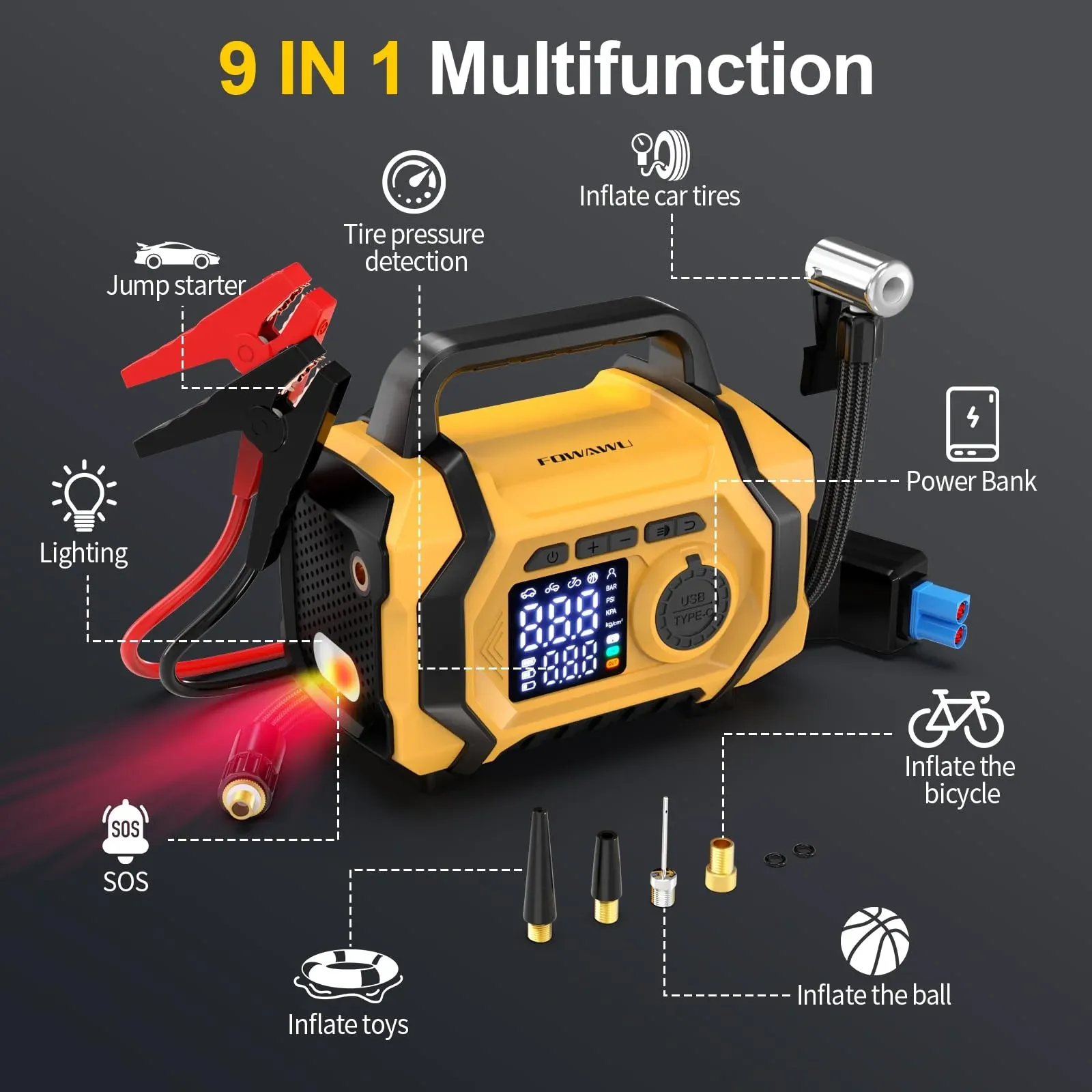
Single-cylinder inflators work fine for standard hatchbacks. But if you're running an SUV, a loaded estate, or towing anything, you need more airflow. Dual-cylinder units push roughly twice the volume per minute.
The etnwlfpor commercial-grade model uses twin cylinders powered by that 19200 mAh battery. The result is faster inflation, less strain on the motor, and a longer lifespan. It's the difference between a unit that lasts two years and one that's still going strong after five.
Performance data: A dual-cylinder cordless tire inflator typically delivers 35-40 litres per minute, compared to 15-20 L/min from single-cylinder alternatives. For a 225/45 R17 tyre inflated from 20 PSI to 33 PSI, that translates to approximately 2.5 minutes versus 5+ minutes.
So what's the catch? Weight and price. Dual-cylinder units weigh around 1.8-2.2 kg versus 0.8-1.2 kg for singles. And they cost more — the etnwlfpor sits at £112.32, while basic single-cylinder options start around £35-50. Worth the extra spend? If you drive anything larger than a Fiesta, absolutely.
Cordless vs 12V DC Inflators: A Direct Comparison
The traditional 12V DC inflator plugs into your car's accessory socket. It's cheaper upfront. But the trade-offs are significant for anyone who values convenience and reliability.
| Feature | Cordless Battery Inflator (e.g., etnwlfpor Dual-Cylinder) | 12V DC Inflator (e.g., RAC820) |
|---|---|---|
| Power Source | 19200 mAh rechargeable lithium-ion | Vehicle 12V socket (engine must run) |
| Portability | Fully portable — use anywhere | Tethered to vehicle by cable |
| Inflation Speed (car tyre, 0-35 PSI) | ~2.5-3 minutes (dual-cylinder) | ~2.5 minutes (RAC820 claims) |
| Price | £112.32 | £45-65 |
| Use Without Vehicle | Yes — bikes, sports equipment, camping gear | No — requires running engine |
| Cable Management | None required | 3-4m cable to manage in wet/dark conditions |
| Automatic Shut-Off | Yes, digital preset | Yes (on premium models) |
| Multi-Tyre Capability (single charge/session) | 4-6 tyres per charge | Unlimited (vehicle-powered) but overheating risk after 10+ min |
| Weight | ~2.0 kg | ~1.5 kg (plus cable bulk) |
To be fair, 12V units aren't terrible. They've got their place. If you never leave the vehicle and only inflate car tyres, they'll do the job. But the moment you want to pump up a bicycle tyre in the garage, or inflate something at a campsite 50 metres from the car, you're stuck. The cordless option just gives you more flexibility for a reasonable premium.
Real-World Use Cases Across the UK

Let me paint a few scenarios where a portable battery inflator proves its worth. These aren't hypothetical — they're situations I've either experienced or heard about from colleagues and friends.
The Morning School Run Discovery
It's 8:15am. You're already running late. You notice the rear tyre looks soft. With a cordless inflator, you set it to 33 PSI, press the button, load the kids in, and it's done by the time everyone's buckled up. Without one? You're driving on an underinflated tyre to the nearest garage, hoping the TPMS light doesn't escalate to a blowout warning. (We've all been there, and it's not a fun way to start a Tuesday.)
Caravan and Touring Holidays
Caravan tyres lose pressure during storage. Every single time. After sitting on a drive from October to April, you'll typically find them 8-12 PSI below recommended. A high-capacity portable pump handles this without needing to tow the caravan to a petrol station first — which, if you've ever tried manoeuvring a caravan into a forecourt air bay, you'll know is its own special nightmare.
Remote Breakdowns and Slow Punctures
Slow punctures are insidious. You might not notice until you're 30 miles from anywhere on the A87 heading to Skye. A cordless tire inflator buys you time — enough to reach a tyre fitter safely rather than calling for recovery and waiting three hours on a single-track road.
The Health and Safety Executive notes that roadside incidents remain a significant risk category for UK drivers, with proper vehicle maintenance being a primary preventive measure.
Fleet and Commercial Use
If you manage multiple vehicles — delivery vans, school minibuses, trade vehicles — a commercial-grade wireless inflator pays for itself within months. Proper tyre pressure reduces irregular wear, extends tyre life by up to 20%, and keeps fuel costs predictable. At £112.32 for the etnwlfpor unit, that's potentially recovered in a single set of tyres lasting an extra 5,000 miles.
Frequently Asked Questions
How long does a cordless tire inflator take to inflate a flat car tyre?
A dual-cylinder cordless tire inflator typically inflates a standard car tyre from flat (0 PSI) to 35 PSI in 2.5-4 minutes. Single-cylinder models take 5-7 minutes for the same task. The etnwlfpor dual-cylinder unit with its 19200 mAh battery achieves the faster end of this range consistently across multiple tyres per charge.
Can a battery-powered inflator handle SUV and van tyres?
Yes, provided you choose a commercial-grade model with sufficient battery capacity. Units with 19200 mAh batteries and dual cylinders can inflate larger volume tyres (up to 255/55 R19 and similar) without overheating. Budget models with smaller batteries may struggle or overheat on tyres above 205 width. Always check the manufacturer's maximum PSI rating — 150 PSI capability covers virtually all passenger and light commercial vehicles.
How many tyres can a cordless inflator fill on one charge?
With a 19200 mAh battery, expect to inflate 4-6 standard car tyres from 20 PSI to 33 PSI on a single charge. Top-ups from 28 to 33 PSI use far less energy — you could manage 10-15 top-ups per charge. Smaller 6000 mAh units typically handle 2-3 full inflations before requiring recharging, which takes 2-4 hours via USB-C or mains adapter.
Are cordless tyre inflators accurate enough for safety-critical pressure checks?
Quality digital inflators achieve ±0.5 to ±1.0 PSI accuracy, which meets the requirements for safe passenger vehicle operation. This matches or exceeds the accuracy of most petrol station air machines. For absolute precision, cross-reference with a calibrated pencil gauge annually. The automatic shut-off feature on modern units like the etnwlfpor prevents over-inflation, adding an extra safety margin.
Is a cordless tire inflator worth the price compared to a 12V plug-in model?
For most UK motorists, yes. The £50-70 premium over a basic 12V model buys complete portability, multi-use capability (bikes, inflatables, sports equipment), and eliminates cable hassle in poor weather. If you only ever inflate car tyres beside your vehicle, a 12V unit works fine. But for versatility and convenience — especially on touring holidays or for households with multiple vehicles — the cordless option delivers stronger long-term value at around £112 for a commercial-grade unit.
Can I use a cordless inflator in the rain?
Most quality cordless inflators are splash-resistant but not fully waterproof. Light rain and damp conditions are fine — you'll encounter these constantly in the UK. Avoid submerging the unit or using it in heavy downpours without shelter. Look for models with rubberised housings and sealed battery compartments. Store in the included carry case between uses to prevent moisture accumulation in the boot.
Key Takeaways
- A cordless tire inflator eliminates dependence on petrol station air machines — critical for rural UK driving where services are sparse and often unreliable.
- Dual-cylinder models with 19200 mAh batteries inflate standard car tyres in under 3 minutes and handle 4-6 tyres per charge — sufficient for a full vehicle plus spare.
- Proper tyre pressure saves money: up to 3% improvement in fuel economy and 20% longer tyre life, easily recovering the £112.32 investment within 12 months of regular use.
- UK temperature swings of 10-12°C within a single day can cause 2 PSI pressure drops — regular monitoring with a portable inflator keeps you within safe operating range.
- Versatility beyond tyres: bicycles, caravans, sports equipment, and camping inflatables all benefit from a single rechargeable device kept in the boot.
- Automatic shut-off and digital gauges (±0.5 PSI accuracy) remove guesswork and prevent over-inflation — safer than manual pumps for inexperienced users.
- For June 2026, the etnwlfpor dual-cylinder unit at £112.32 represents strong bang for your buck in the commercial-grade portable inflator category, outperforming budget alternatives on battery life and inflation speed.
Ready for cordless tyre inflation?
ETENWOLF Vortex S6 · 150 PSI · 19200 mAh · Free UK delivery
Shop Vortex S6 — £93.03